How to Get the Most from Your Sauna Session — From First Round to Final Rest
A Finnish 20-year study found 63 % lower risk of sudden cardiac death among those who took sauna 4–7 times a week. Here's how to structure a session that actually delivers.
Most people think a sauna is just sitting in heat. That's half of it. The other half — the breaks, the cold rinse, the rest — is where most of the effect happens. Get the rhythm right and you come out a different person.
In 2015, researchers at the University of Eastern Finland followed 2,315 men for over 20 years (Laukkanen et al., JAMA Internal Medicine). Those who took a sauna four to seven times a week had a 63 % lower risk of sudden cardiac death and 40 % lower all-cause mortality than once-a-week users. Longer sessions — over 19 minutes — beat shorter ones by a wide margin. The numbers are clear: the sauna works, and it works best when you do it right.
Here's how we at Vestfjord Sauna typically recommend structuring a session.
Before you go in — five minutes that change everything
Preparation is underrated. What you do in the last five minutes before sitting on the bench shapes how your body responds.
Drink water. Half a litre beforehand. You'll lose more than that in sweat anyway.
Eat lightly, one to two hours before. Never on a full stomach — you'll feel heavy and slightly nauseous. Never on a totally empty stomach either — blood pressure drops fast.
Skip the alcohol. Alcohol and heat together lower blood pressure and raise the risk of something going wrong. Wait until after.
Shower and dry off properly. Dry skin heats faster than wet. You skip the first ten minutes of just getting warm.
The classic sauna round
A full session is three rounds. Two if you're short on time, but never just one — that's when the body is only starting to open up.
Round 1: let the body wake up (8–12 min)
Sit on the lower bench first. The temperature is lower here, and your body has time to adjust blood pressure. Breathe calmly. When you're properly sweating — usually after seven or eight minutes — move up a step. Leave when you feel lightly warm, not when you're pushed.
Cold rinse or fjord plunge (30–90 sec)
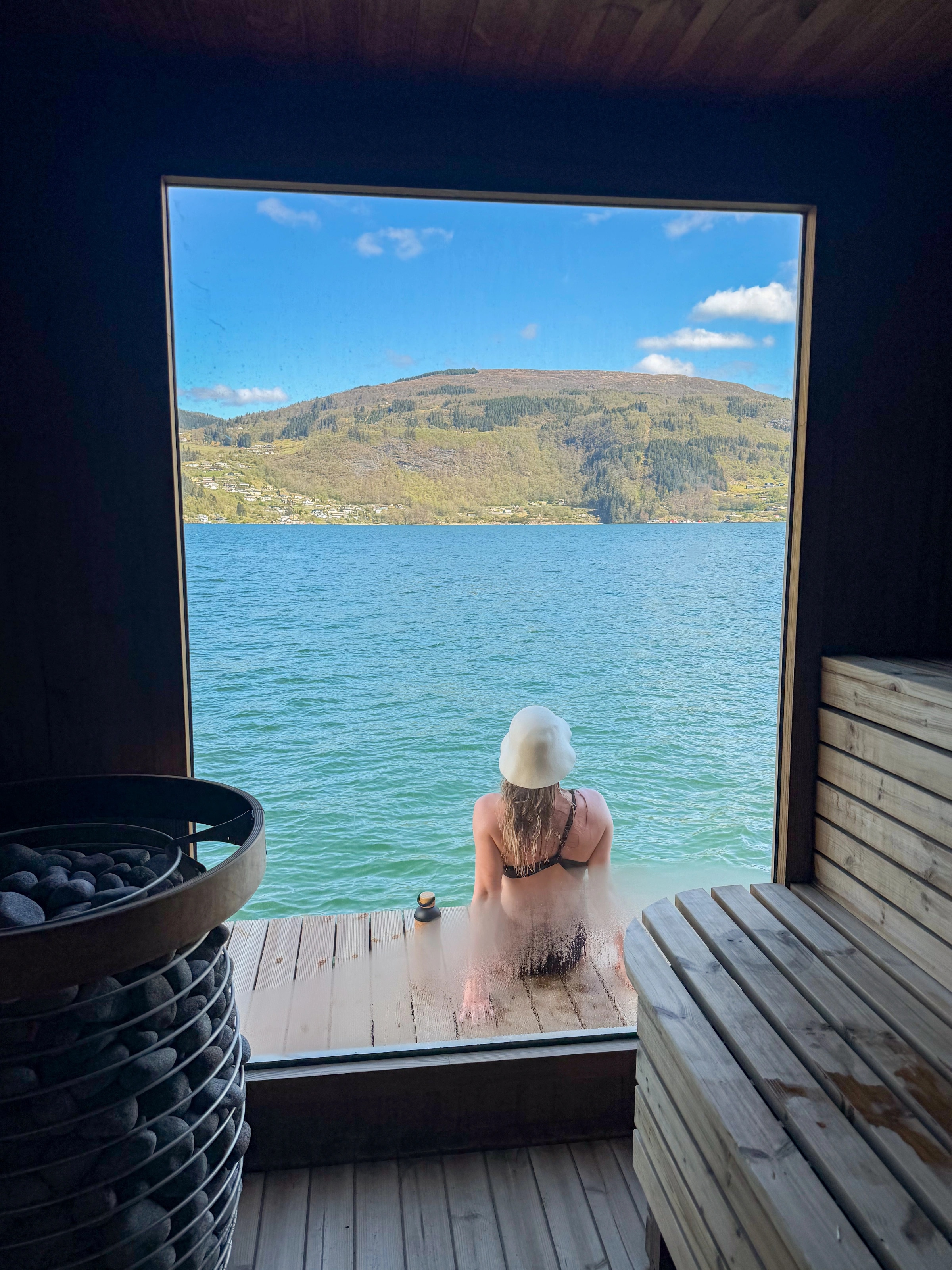
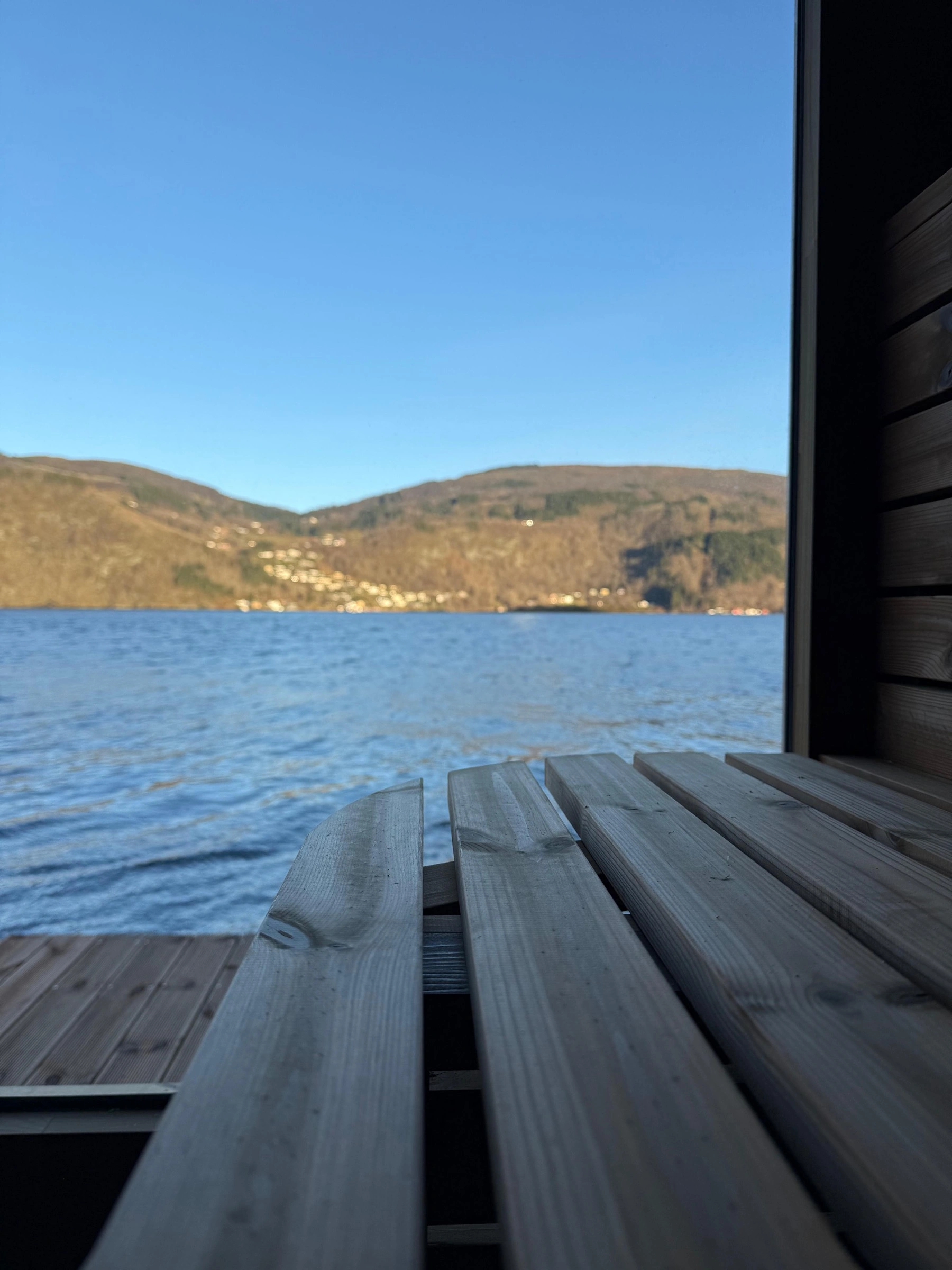
Go straight to cold water. Here, the fjord is right outside; at home, a cold shower does the same. Breathe through it — don't hold your breath. Start with the legs, work up, head last. The shock is the point. Coming out, your pulse drops in seconds and you feel a calm that's hard to describe.
Rest (5–10 min)
Sit down. Outside if you can, wrapped if it's cold. Drink a glass of water. Don't reach for your phone — let the body work. This is the part people rush, and it's a shame. This is when the nervous system resets.
Round 2: where most of it happens (10–15 min)
Now the body is open. You can go straight to the top bench. Sweat comes fast and heavy. Many feel their pulse in the head — that's normal, the body is working. Stay until you have a clear, light sense of "that's enough".
Longer cold (1–2 min), longer rest (10–15 min)
The second cold round can be longer. Many manage a minute and a half now. Then: long rest. Sit outside, feel the skin settle, the pulse drift back.
Round 3: only if the body wants it (10–20 min)
Round three is for those with time and a body that's saying yes. If you're tired or feel off — skip it. There's no point pushing. Two good rounds beat three poor ones.
A note on the research
The Laukkanen study is the biggest we have. 2,315 Finnish men, followed for over 20 years:
4–7 times a week meant 63 % lower risk of sudden cardiac death and 48 % lower risk of fatal coronary heart disease — compared with once-a-week users.
Longer sessions worked better. Sessions over 19 minutes meant 52 % lower sudden-cardiac-death risk than sessions under 11 minutes. Build up gradually — 30 minutes in one stretch is too much for most.
A 2018 review (Hussain & Cohen, ECAM) also documented effects on blood pressure, post-exercise recovery, and autonomic balance.
The most important point: consistency beats intensity. Three relaxed sessions a week over time do more than one weekend marathon.
Common things to consider
Too hot too soon. Top bench on round one is too ambitious for almost everyone. Start low.
Skipping the cold part. Heat alone doesn't deliver the full effect. The contrast is what works.
Alcohol after. It dilates already-dilated vessels and dehydrates a body that's already given fluid. Wait an hour or two.
After the session — the evening matters more than you think
The effect settles in over the following hours. A few simple things help:
Replace the fluid. A litre and a half of water over the evening. A pinch of salt or a broth is even better — you lost sodium too.
Eat a light, warm meal. Soup, fish, vegetables. Not heavy or fatty — the body is still in recovery.
Go to bed early. The sleep that night is often the deepest of the week. Don't waste it on a screen.
Who should take it carefully
Sauna is safe for almost everyone, but a few conditions warrant a doctor's input:
Unstable angina, recent heart attack, or severe heart failure
Uncontrolled high blood pressure — sauna is fine, but shorter sessions and lower temperatures
Pregnancy — ask your midwife; don't exceed 70 °C and keep rounds short
Active severe skin conditions
After alcohol — wait until the next day
Try it with us
We have saunas along the whole Vestfjord where you can follow this rhythm — fjord plunge included. Book a session here. We have water, towels and sauna salt ready in the shop.
Questions about your session? Send us a message. Happy to help.
Keep reading
Himalayan Salt in the Sauna — Natural Skincare and a Mineral Bath
Himalayan salt in the sauna gives softer skin, open pores and better circulation. A short, practical guide to using it the right way.
Badstue på resept
Vi i Vestfjord Sauna utrolig stolte av å være en del av Bergen kommunes satsing: Badstue på resept.
Hva er aufguss?
Leter du etter en badstuopplevelse som går utover det vanlige? Da bør du teste aufguss, et velværeritual som kombinerer damp, eteriske oljer, musikk og rytmiske hånklebevegelser til en uforglemmelig multisensorisk reise.